Manufacturing Solutions
Technology Built for
How Manufacturing Actually Works
Improve visibility, reduce manual work, and connect inventory, purchasing, production, material planning, and operational data with practical technology designed around the shop floor.
Manufacturing Capabilities
Connect the Flow of Material and Information
Manufacturing problems rarely exist in isolation. Inventory, purchasing, production, material planning, and operational data all affect one another. We build solutions that connect those processes instead of treating them as separate systems.
Inventory Management
Improve visibility into raw materials, components, work in process, and finished goods across your operation.
Purchasing & Supply
Track purchasing requirements, open orders, suppliers, lead times, and material availability.
Production Workflows
Connect work orders, operations, material usage, production status, and shop-floor activity.
Warehouse Operations
Organize locations, receiving, material movement, picking, staging, and inventory transactions.
Material Planning
Understand what material is required, what is available, what is on order, and what needs attention.
Manufacturing Data
Turn operational data into dashboards, reports, metrics, and information your team can actually use.
Shop-Floor Perspective
Technology Should Fit the Operation
Manufacturing software is most useful when it reflects what actually happens on the floor. Material moves. Priorities change. Inventory gets consumed, received, allocated, relocated, and adjusted. Purchasing decisions affect production, and production decisions affect material requirements.
DB Logical Solutions approaches manufacturing technology from that operational perspective first, then determines where software, automation, data, or process changes can make the work simpler and more visible.
Right-Sized Systems
You Don't Always Need
A Full ERP
Traditional ERP systems can solve a lot of problems, but they can also introduce cost, complexity, and processes that don't fit the way a smaller manufacturing operation actually works.
Sometimes the better solution is to improve the systems you already have, connect disconnected information, automate the repetitive work, or build a focused application around a specific operational need.
Start With What You Need
Solve the operational problems that matter now without implementing an entire enterprise platform.
Fit Existing Workflows
Build around the processes that already work while improving the areas that create friction.
Connect Existing Data
Use and organize information from spreadsheets, databases, applications, and existing business systems.
Expand Over Time
Add capabilities as requirements grow instead of forcing the business into unnecessary complexity.
Built From This Perspective
MaterialFlow
In DevelopmentManufacturing software built around the material.
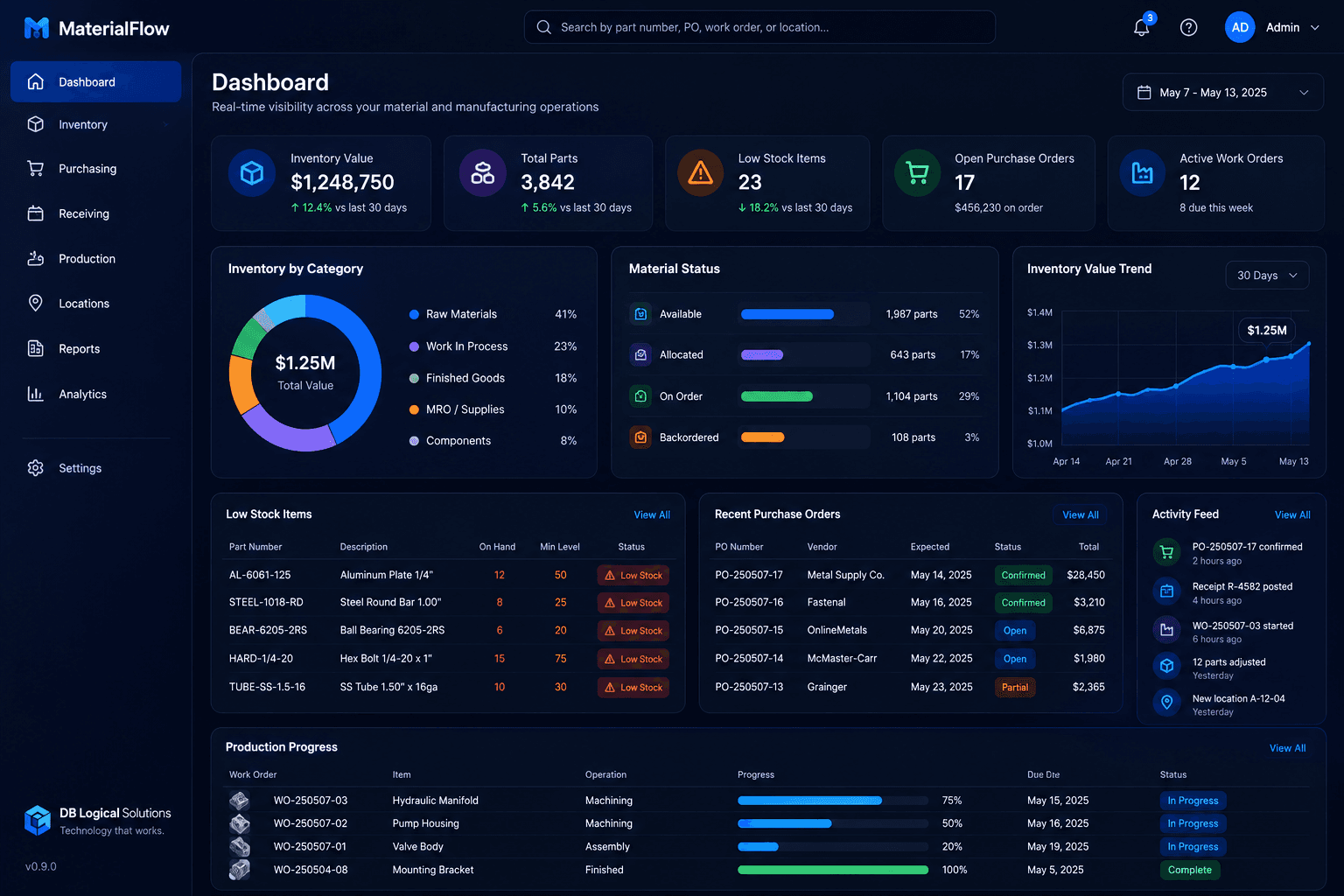
The same challenges we see across inventory, purchasing, material requirements, locations, and production are shaping MaterialFlow — a manufacturing platform being developed around the movement and visibility of material through the operation.
Rather than trying to reproduce the complexity of a traditional ERP, MaterialFlow is focused on giving smaller manufacturers the information and control they need to manage material and production more effectively.
Start With the Operation
Have a Manufacturing Process That Could Work Better?
Tell us where the friction is — inventory, purchasing, material flow, production, reporting, or something else. We'll help determine whether the right answer is software, automation, process improvement, or a combination.
No obligation. Start with the problem.